

What Can I Do With Ham Radio?
Twenty-odd different hobbies share one license. Here is what is actually out there, and where to start on each one.
Most new hams eventually ask the same question: what can I actually do with this thing? Ham radio is far more than grabbing a handheld and spinning up on a 2 meter repeater. That does play a role, and it is where most of us start, but it is one doorway into a hobby with a couple of dozen rooms behind it.
Remember in my videos I talked about going down rabbit holes? Well, since you asked, let us open the can and see what we find. Everything below is something you can genuinely do with a license and the gear you already own, or with very little more. If you would rather walk the same tour on paper, and then decide which of these belongs in your own plan, that is the back half of Ham Radio for Non-Techies.
Talk to People
The simplest thing you can do, and the thing that keeps most people in the hobby. None of this needs an HF radio or a big antenna.
Nets
A scheduled on-air meeting. Local and neighborhood nets, social nets, and official traffic and emergency nets. Check in, say your callsign, listen. It is the easiest first transmission you will ever make.
Clubs and Hamfests
Clubs meet monthly, run classes and build nights, and will happily put a newcomer on the air. Hamfests are part swap meet, part reunion. This is where the used gear and the good advice live.
Ragchewing
Just talking. Find a repeater or a quiet HF frequency and have a conversation with someone you have never met. No contest, no award, no schedule.
Operate Portable
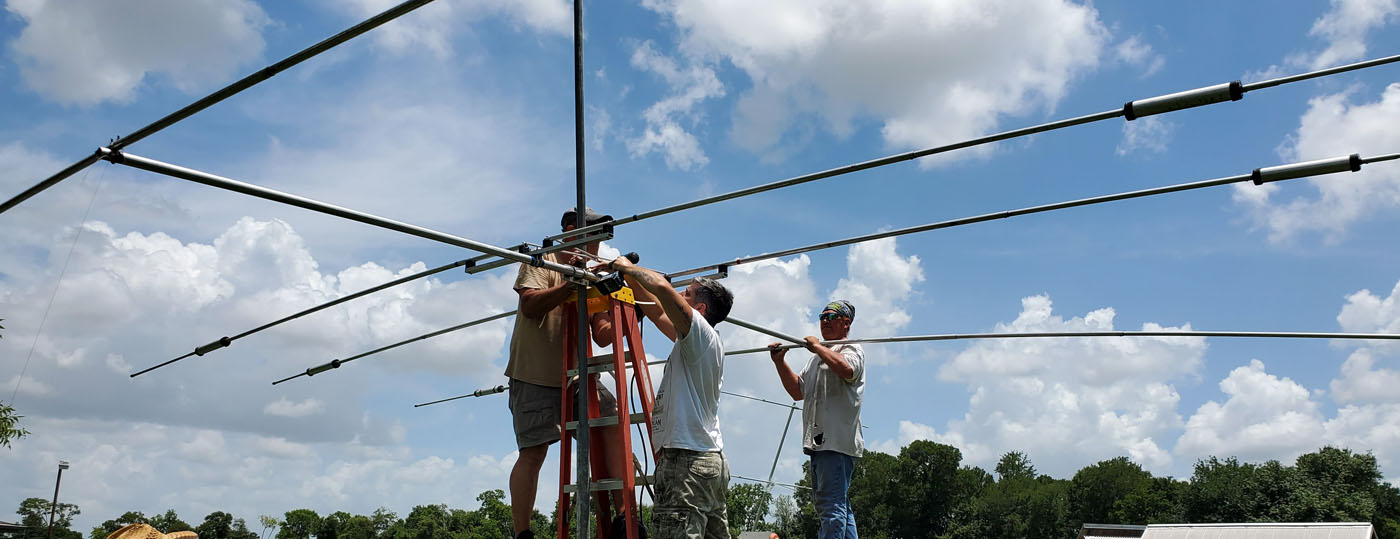
Portable operating has become the busiest corner of the hobby. A small radio, a wire in a tree, a battery, and you are on the air from a park bench.
Parks on the Air
Activate a park, or hunt the people who are. Free to join, thousands of parks, and the friendliest pileups you will ever work. Start with the POTA crash course.
Summits on the Air
The same idea with a hike attached. Carry a QRP radio up a hill and work the world on five watts. Harder, quieter, and hugely satisfying.
Field Day
The fourth full weekend of June, every year. Clubs set up in fields and parks and operate for 24 hours on emergency power. The best day of the year to show up and try it.
Chase Something
If you like collecting, scoring or hunting, the hobby has all three. These mostly want HF, which means a General or Extra license.
Contesting
Work as many stations as you can inside a set window. Some run 48 hours, some run four. Field Day is the gentlest way in; worldwide DX contests are the deep end.
Chasing DX
Working other countries. The thrill is a weak signal from somewhere you have never been, pulled out of the noise because the band happened to open.
Awards
Worked All States, Worked All Continents, and DX Century Club for a hundred countries. Confirmed contacts turn into certificates you can hang on the shack wall.
Fox Hunts
Somebody hides a transmitter and everyone else finds it with a directional antenna. It is a genuinely good afternoon out, and the same skill finds interference for real.
Logging Contacts
Keep a record of who you worked. QRZ and Logbook of the World confirm contacts electronically, N3FJP and HAMRS are the logging programs most people use, and eQSL swaps cards digitally.
Spotting
Cluster and spotting networks show what is being heard right now, worldwide. It is how you find the rare one before the pileup does.
Digital Modes
Digital modes decode signals your ears cannot hear. That means real contacts with low power and a compromised antenna, which is why they have taken over the bands.
FT8 and the Weak-Signal Modes
The busiest thing on HF today. FT8 exchanges a tiny amount of data in fifteen-second slots and decodes signals far below the noise floor. Free software, and a laptop plus a cable is the whole setup.
Winlink, Packet and RTTY
Email and text over radio, with no internet involved. Winlink is a serious emergency communications tool. RTTY and packet are the older data modes and still see contest and network use.
Digital Voice
DMR, D-STAR and Yaesu System Fusion carry your voice as data. Talkgroups and reflectors let a handheld reach a repeater on the other side of the planet through the internet.
Work the Sky
All of this is possible with equipment a beginner can own. The satellite pass in particular needs nothing more than a dual band handheld and a bit of patience.
Amateur Satellites
There are working repeaters in orbit. A dual band handheld and a small beam will get you contacts hundreds of miles away during a ten-minute pass. Pocket Elmer tracks the passes for you.
The Space Station
The ISS carries an amateur station. Astronauts make contacts, it runs a packet digipeater, and school groups get scheduled voice contacts through ARISS.
Moonbounce and Meteor Scatter
Bounce a signal off the moon and hear it come back two and a half seconds later. Bounce one off the ionized trail of a meteor. The deep end of VHF, and completely real.
Reach Beyond Your Antenna
These systems bridge repeaters over the internet. A five watt handheld in your kitchen can end up coming out of a repeater in another country. Purists grumble; it is still radio at both ends, and it is a lot of fun.
EchoLink
Links repeaters and individual stations over the internet. There is a phone app, so you can also connect without a radio at all once you are verified as a licensed operator.
WIRES-X and Fusion Rooms
Yaesu's linking system for System Fusion radios. Join a room and you are talking to whoever else is in it, wherever they happen to be.
IRLP and AllStar
Older internet linking networks still carried by plenty of repeaters. Ask your local club which linked systems are active in your area, since coverage is very regional.
Build and Experiment
Amateur radio is the only hobby where you are licensed to build your own transmitter. Most people start with an antenna, because an antenna you built yourself and tuned yourself will outperform anything you can buy at the same price.
Antennas
Wire, coax and a couple of insulators will get you on HF. A dipole costs about twenty dollars and works. Antenna Forge walks you through designing, building and tuning one.
Kits and QRP Rigs
Radio kits are still a thing, from simple code practice oscillators up to complete multi-band QRP transceivers you solder together yourself.
Repair and Restore
Old radios are cheap, well documented and repairable. Fixing a boat anchor from the sixties teaches you more electronics than any course.
Give Something Back
This is the part of the hobby that justifies the spectrum. When the phones and the internet go down, amateur radio is still standing, and trained operators are what make that useful rather than just true.
ARES and RACES
The organized emergency services. ARES is run through the ARRL and takes any licensed amateur; RACES is activated by local government. Both train regularly so the skills are there before they are needed.
Skywarn
Trained storm spotters reporting real conditions to the National Weather Service. The training is free, takes about two hours, and radar cannot see what you can see from your driveway.
Event Communications
Parades, marathons, bike races and festivals all need communications, and they are excellent low-stakes practice for the day something real happens.
Become an Elmer
An Elmer is a mentor. Six months after your own test you will already know enough to help the next person, and that is how this hobby has always propagated.
Volunteer Examiner
VEs run the license exams. Once you hold a General or Extra you can be accredited and help put new operators on the air.
Teach and Learn Morse
CW is no longer required for any exam, which is exactly why learning it is now a pleasure rather than a chore. It gets through when nothing else will.
Tools on This Site to Get You Started
Every one of these is free, runs in your browser, and was built for exactly this site. Pocket Elmer tells you what you can do right now with the license and radio you actually have, including satellite passes and park activations near you. Antenna Forge designs and tunes your first antenna. CW Forge teaches Morse. Radio Rosetta translates one radio’s menus into another’s, and Exposure Forge runs the RF exposure evaluation the FCC now requires of you.
Suggested Links From the Fans
Sent in by readers. Got one worth adding? Send it over.